
Friends of Figma & Figma Weave, 2020 to now


The first Config happened in 2020, and Figma set up a free Slack workspace for attendees. I spent the conference being as present as I could there and on Twitter: making connections, welcoming new members, talking to whoever showed up. Config ended. The workspace kept going. People were still talking, so I asked Figma's designer advocates if I could take over as a moderator and keep the room open.

They introduced me to Rogie King and Nadia Hussain, who were shaping what would become Friends of Figma. The Friends of Figma Slack was, in fact, the Config 2020 workspace rebranded: a community that outlived its event, because the event was never really the point.

I had no community experience. My working theory of the job was simple: be present with people. Show up, answer questions, keep the room warm. That theory carried me through the first year, and I still believe it. What I learned over the five years since is that presence is where community work begins: underneath it sits a system that can be designed, and designing that system became the actual job. In 2021 I joined Figma's community marketing team as a contractor, and in 2026 I signed a new engagement with Weave, Figma's next generation of creative tools, to lead community strategy and operations across their ecosystem of surfaces. The principles below were developed in the first contract and are being refined in the second. That transfer is the point of this page: they were never Figma-shaped principles, they were community-shaped ones.
Every space should know what it's best at
Figma's community members touch a lot of surfaces: the Forum, friends.figma.com, Discord, Reddit, Telegram, and more. Early on I watched members bounce between them, asking product questions in social spaces and looking for connection in support channels. Ambiguity about a space's purpose is expensive twice over: members get routed inefficiently, and Figma loses signal about where investment matters most.
The remedy is a documented map: what each space does best, written down as a shared source of truth the broader team can reference when deciding where to invest, where to direct members, and where to listen. This is now a formal workstream in my engagement with Weave, and it started as a habit of noticing where conversations went to thrive and where they went to die.
Design the journey, not the platform
Members move through phases: they discover and celebrate new features, they learn and practice in private or in groups, and they connect and share what they've made. Each platform serves some phases well and others poorly. Discord sits most naturally in connect and share, with strong supporting roles in launch chatter and peer support. Mapping the journey clarifies what each space should do well, and just as usefully, what it shouldn't try to be.


The workshop series I ran in Discord with Clara Ujiie, reviewing new features with designers and advocates from Figma and the community, lived squarely in the learn and practice phase: a format designed for that moment in the journey rather than for the platform it happened to run on.
Community signal is product signal
A healthy community is a continuous research study that nobody had to recruit for. I maintain a regular cadence of growth, engagement, and sentiment reporting, and the most valuable thing it surfaces is the gap between member expectations and product reality. Trending topics, recurring questions, and feedback themes become proposed initiatives: channels, events, content, and product feedback routed to the teams who can act on it.

The clearest expression of this principle was helping set up and moderate the Sites beta community: community operations working as launch infrastructure, putting real users and the product team in the same room while the product was still soft.

Trust is infrastructure

The work nobody notices when it's done well: moderation, escalation paths, Code of Conduct enforcement, authentication. For Config 2022 I created the live moderation plan and managed a team of moderators on site. With partners like Common Room I helped implement and maintain the authentication systems that keep community spaces safe at scale. None of this is glamorous, and all of it is load-bearing. Every principle above depends on members feeling safe enough to show up honestly.

Growth is a symptom of health
Between 2020 and 2021 our primary community channel grew by over 1050%, with members sharing an average of 15,000 messages per month. By 2023 it had climbed over 2000% since launch. I include these numbers as evidence rather than as the story: I never worked toward a growth target, I worked on the conditions above, and growth followed.
Transferring them: Weave, 2026
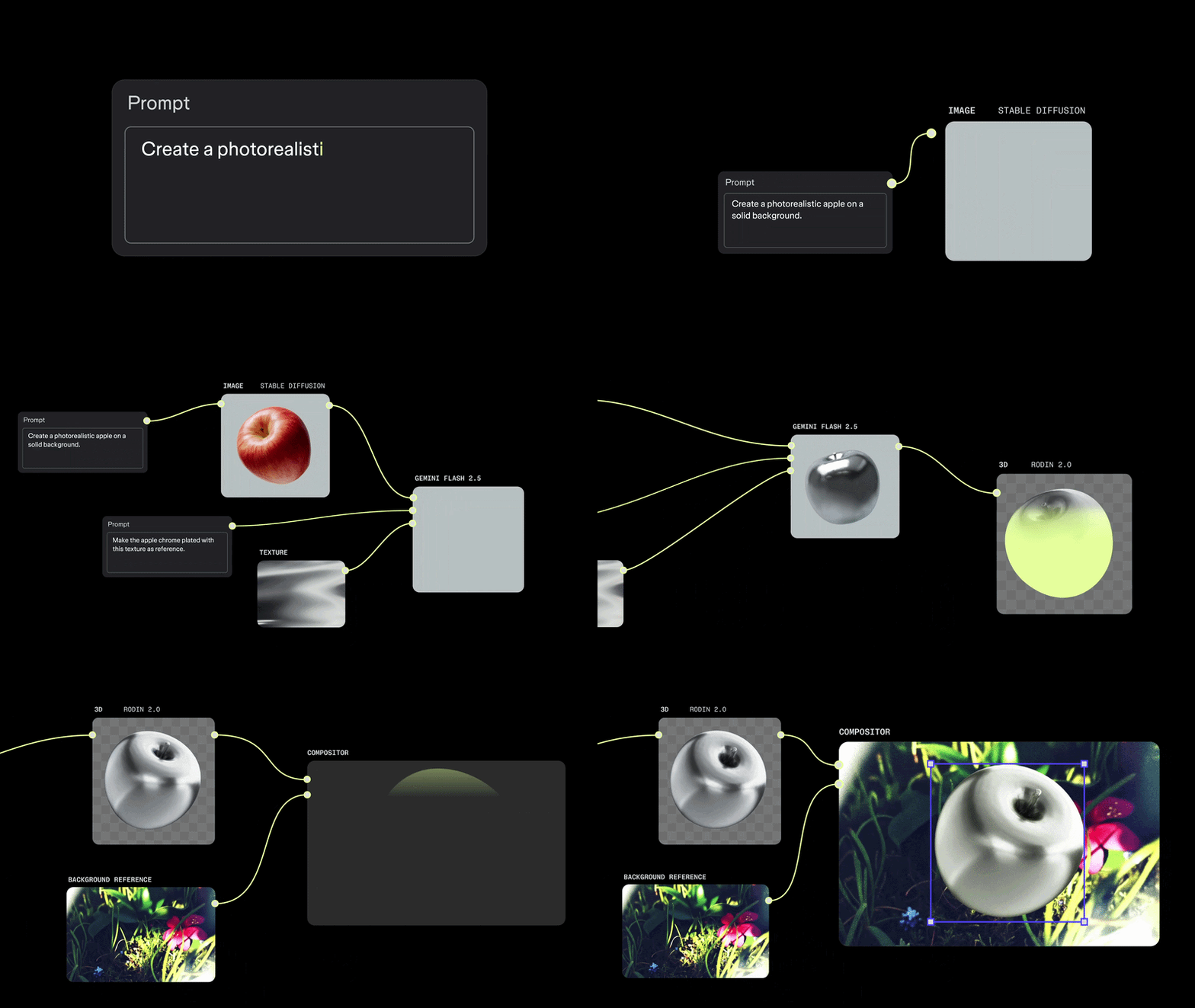
The engagement I began with Weave in 2026 covers community strategy and operations across Figma's surfaces, with Discord as a primary hub and a wider focus on how members move between owned, partnered, and community-led spaces. When the scope took shape, the workstreams that emerged were these principles, formalized: define what each space excels at, establish community journeys, optimize the central hub, and turn community insight into initiatives.
Five years ago I thought the job was being present with people. I still think that: presence is where every principle on this page started, and it's still the first thing I do each morning. The rest is what presence taught me to build.
Read more: